
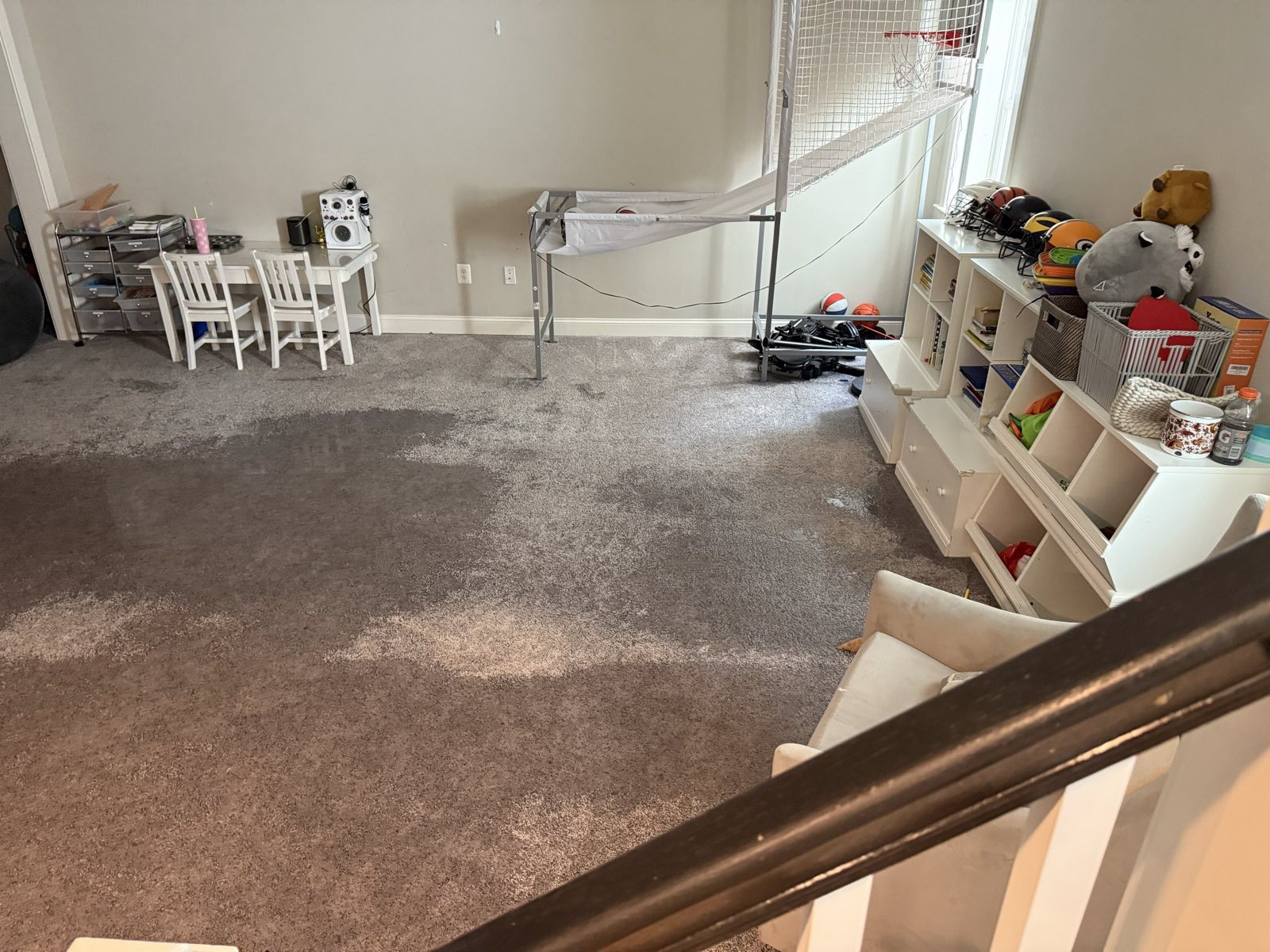
Water Damage Restoration in New York City
When a riser bursts on the fourteenth floor or your upstairs neighbor's washing machine hose lets go at 2 a.m., minutes matter. Restoration Doctor of NYC dispatches extraction and drying crews around the clock, with the paperwork and building coordination New York properties demand.
Water Moves Differently in a Vertical City
In most of the country, water damage is a horizontal problem: a pipe breaks, water spreads across a floor, and the loss stays inside one home. New York City is built vertically, and water obeys gravity. A failed supply line in a twentieth-floor kitchen can travel down the same stacked line of apartments for ten floors before anyone notices, soaking ceilings, light fixtures, and closet walls in units whose owners were asleep or out of town. By the time a super gets the call, the loss often involves multiple units, common hallways, and an elevator shaft.
That is why our first move on a multi-unit loss is tracing the water path, not just drying the room where it was first reported. Using moisture meters and thermal imaging, our technicians map how far the water migrated vertically and laterally, then document each affected unit and common area separately. That documentation matters later, because a stacked-line loss in a co-op or condo usually touches more than one insurance policy and more than one responsible party.
We also understand the failure modes specific to New York building stock. Pre-war buildings run steam heat, and a corroded steam-line fitting can release scalding vapor and condensate into plaster walls that hold moisture far longer than modern drywall. Post-war high-rises depend on pressurized risers, and a riser failure can push a large volume of water through a building in minutes. Brownstones and row houses face their own pattern: aging drain lines, roof and parapet leaks, and cellars that flood when a heavy rain overwhelms the city's combined sewer system.
Emergency Response Built Around Building Access
Getting equipment into a Manhattan high-rise is not the same as backing a truck into a suburban driveway. Most managed buildings require a certificate of insurance naming the building, its managing agent, and sometimes the board before a contractor can set foot past the lobby. Many restrict work to a freight elevator with limited hours and a booking sheet. We handle this constantly: our office can issue COIs quickly, and our crews arrive knowing they may need to stage dehumidifiers, air movers, and extraction units through a service entrance on the super's schedule.
For true emergencies — active water intrusion, ceiling collapse risk, water reaching electrical panels — most buildings will grant immediate access even outside normal freight hours, and we coordinate directly with the resident manager or super to make that happen. Stopping the source, extracting standing water, and stabilizing the space comes first; the formal paperwork catches up in parallel rather than holding up mitigation.
Once the water is out, drying begins. We set drying goals based on the materials involved — hardwood strip flooring over sleepers, gypsum board, plaster on wood or wire lath, concrete slab — and monitor daily with documented moisture readings until each material reaches its drying standard. Our drying approach is consistent with the IICRC S500 standard of care for professional water damage restoration, and every reading goes into a drying log you and your insurer can review.
Plaster, Hardwood, and Pre-War Finishes
A large share of New York's housing predates drywall. Plaster on lath behaves very differently from gypsum board when it gets wet: it absorbs water slowly, releases it slowly, and can often be saved with patient, controlled drying where drywall would simply be cut out and replaced. Tearing out original plaster crown moldings or a keyed plaster ceiling in a pre-war co-op is expensive and, in many cases, unnecessary. Our technicians evaluate whether plaster can be dried in place before recommending demolition, and when removal is unavoidable, we cut conservatively and document why.
Hardwood floors are the other signature New York finish, and they are unforgiving. Cupping, crowning, and buckling can develop days after the visible water is gone if moisture remains trapped beneath the boards or in the subfloor. Where conditions allow, we use specialty drying mats and containment to pull moisture out of wood flooring in place, which can save both the floor and the disruptive refinishing project that comes with replacement. When boards are beyond saving, we document species, dimensions, and layout so the replacement scope is accurate.
Ceilings deserve particular attention in stacked-apartment losses. Water pooling above a plaster or drywall ceiling adds real weight, and a sagging ceiling is a safety issue, not a cosmetic one. Our crews relieve trapped water in a controlled way, install containment to protect furnishings, and stabilize the assembly before drying begins.
Co-ops, Condos, and the Question of Whose Policy Pays
Water losses in co-ops and condos raise a question single-family homeowners never face: where does the unit owner's responsibility end and the building's begin? In general terms, a unit owner's HO-6 policy addresses the interior of the unit — often finishes, improvements, and personal property — while the building's master policy addresses the structure and common elements. But the dividing line depends on the specific proprietary lease or condo declaration, the alteration history of the unit, and the wording of both policies. Policies and governing documents vary widely, and we do not interpret them for you — that conversation belongs with your broker, your carrier, and your managing agent.
What we do is make sure everyone in that conversation has clean facts to work with. We photograph and document conditions in each affected unit and common area, identify the apparent source and path of the water, log all mitigation work performed, and provide itemized scopes. When a loss spans several units, we can work with the management company to coordinate access and keep each unit's documentation separate, so each owner and each insurer sees exactly what happened in the space they care about.
The choice of restoration contractor always rests with the owner, the board, or management — whoever controls the affected space — and payment is governed by the applicable policies and building documents. Our job is to mitigate the damage promptly and document it thoroughly, and we do that the same way regardless of how the coverage questions ultimately resolve.
From Drying to Done
Mitigation ends when materials are verified dry, but the project usually does not. Baseboards that were removed for drying need reinstallation, cut drywall needs patching, and floors may need refinishing. Because Restoration Doctor of NYC also performs repairs and reconstruction, you are not left coordinating a second contractor — and a second COI, a second freight-elevator booking, and a second round of board paperwork — to put the space back together.
Costs for water mitigation vary with the volume of water, the category of contamination, the materials involved, and how long the water sat before extraction began. A contained single-room loss caught early sits at the low end; a multi-unit stacked-line loss with hardwood and plaster involvement can run substantially higher, and any figure we give before inspection is a range, not a quote. What is consistent is that fast response reduces cost: every hour water sits, it migrates further and damages more.
If you have water coming in right now, call (646) 789-6264. We answer around the clock, every day of the year, in all five boroughs.
Frequently asked
Active water, mold, fire, or sewage event?
Connect directly with the Restoration Doctor team for your region. Crews are on standby 24/7 with documented response protocols.
Financing available through Stripe, subject to lender approval.