
Fire and Smoke Damage Restoration Across the Five Boroughs
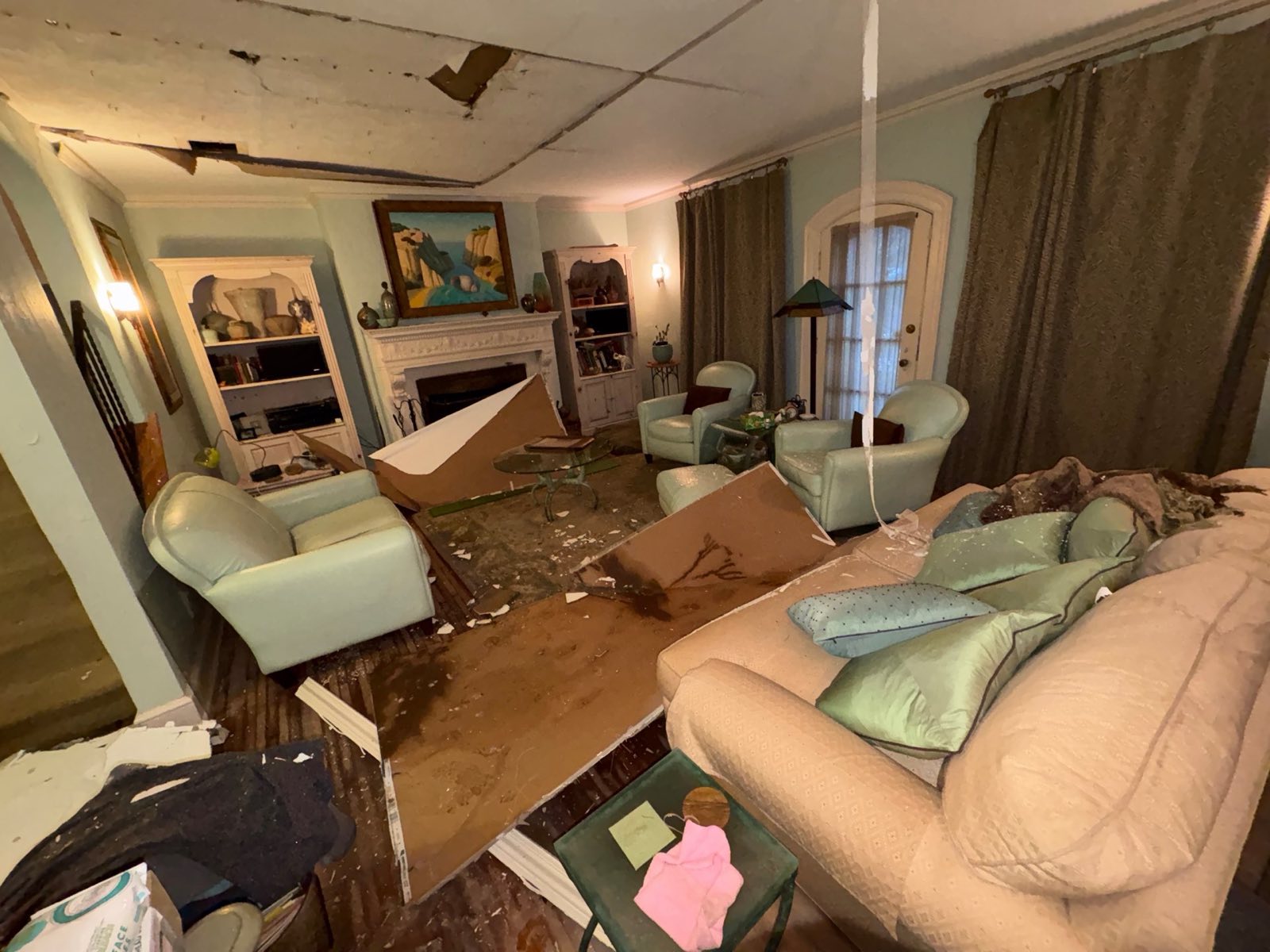
After the fire department leaves, you are standing in a home that took damage from three directions at once: flame, smoke, and the water used to stop them. Restoration Doctor of NYC secures the space, removes what cannot be saved, cleans what can, and rebuilds — one contractor, start to finish.
The First 48 Hours After a Fire
The period immediately after a fire is disorienting, and the building may still be under the fire department's control or subject to a vacate order when you first see the damage. Once the property is released, the priorities are securing and stabilizing: boarding broken windows and doors, tarping roof openings, shutting down affected utilities where needed, and protecting the space from weather, intrusion, and further loss. In an apartment building, securing also means protecting the boundary between your damaged unit and the occupied units around it.
Smoke residue is the reason speed matters even when the flames touched only one room. Soot is acidic, and it keeps working on surfaces after the fire is out — etching glass, pitting metal, and permanently discoloring finishes within days. Early stabilization includes assessing which surfaces need immediate attention to prevent that secondary damage, and moving vulnerable contents out of the soot-laden environment quickly.
There is also almost always a water loss inside every fire loss. Firefighting water follows the same gravity rules as any other water in a vertical building, soaking floors below the fire unit and saturating assemblies that never saw flame. We mitigate that water in a manner consistent with the IICRC S500 standard concurrently with the fire response, because wet, smoke-exposed materials left sitting become a mold problem layered on top of a fire problem.
Smoke Travels Farther Than Fire — Especially Upward
In a multi-unit building, the flame damage may be confined to one apartment while smoke damage reaches a dozen. Smoke rises through stairwells, elevator shafts, pipe chases, and the gaps around risers, and it penetrates far beyond the fire unit — into hallway finishes, into upper-floor apartments, into HVAC paths. A kitchen fire on the third floor can leave odor and residue in a ninth-floor unit whose owner never saw a flame. Part of our assessment on any building fire is mapping how far smoke actually traveled, unit by unit and space by space, because the cleaning scope is defined by the smoke, not the fire.
Different fires leave different residues, and the residue dictates the cleaning method. A slow, smoldering fire leaves a smeary, wet residue that wrong cleaning methods grind deeper into surfaces; a fast, hot fire leaves a drier soot that responds to different techniques; a protein fire — the burned-pot-on-the-stove scenario common in apartment kitchens — leaves an almost invisible film with a penetrating odor that outlasts every visible trace. Our technicians identify the residue type before touching surfaces, and clean in a manner consistent with the IICRC S700 standard for fire and smoke damage restoration.
Pre-war finishes complicate the cleaning question in ways New York crews learn to respect. Soot on flat latex paint behaves differently than soot on decades of oil paint layers; plaster moldings and ornamental details hold residue in their profiles; original hardwood and old-growth trim are worth careful restoration rather than reflexive replacement. We separate what can be cleaned from what must be removed deliberately, because over-demolition of irreplaceable pre-war fabric is its own kind of loss.
Odor Is the Last Thing to Leave — If the Work Is Done Right
Anyone can make a fire-damaged room look clean. Making it smell like nothing happened is the harder discipline, because smoke odor molecules penetrate porous materials — unsealed wood, insulation, plaster keys, the interiors of wall cavities — and re-emerge for months if the source materials are not removed or properly treated. Odor complaints weeks after a superficial cleanup are the signature of a job that stopped at the visible surfaces.
Real odor elimination is a sequence, not a spray: remove the char and heavily saturated materials that are the odor source, clean remaining surfaces of residue, then treat the space and, where appropriate, seal surfaces that will be enclosed by rebuild. Treatment methods are chosen for the situation — an occupied building with shared air paths calls for different choices than a vacated brownstone — and we plan them around your neighbors as well as your unit.
In multi-unit fires, odor work extends into spaces that were never part of the fire unit: hallways, stairwells, and neighboring apartments that took smoke. We coordinate that broader scope with property management, since it crosses the line between private units and common elements, and we keep the documentation for each space separate so every affected party has a record of their own.
Working With Your Building, Your Carrier, and Your Rebuild
A significant fire in a co-op or condo sets several processes in motion at once: the unit owner's HO-6 policy and the building's master policy each respond to their respective interests, the board and managing agent get involved because structure and common elements are affected, and rebuild work beyond simple restoration typically requires an alteration agreement and building approvals. As a factual matter, the master policy generally concerns the building's structure and common elements while the unit policy concerns the unit interior and contents — but the dividing line is set by your building's documents and the policies themselves, which vary, and your broker and managing agent are the right guides there.
Our lane is the work and its documentation. We photograph and inventory the loss thoroughly, produce itemized scopes separating emergency services, cleaning, odor treatment, and rebuild, and keep records that hold up under review. You choose your restoration contractor — that decision belongs to you and, for common elements, to the board or management — and payment for covered work is governed by the applicable policies. We do not represent you in dealings with your carrier, and we will never condition the start of urgent work on an insurance conversation.
Because we rebuild as well as clean, the project does not change hands at the halfway point. The same company that handled board-up and soot removal carries the job through framing, plaster or drywall, finishes, and final walkthrough — one COI package for the building, one freight-elevator relationship, one point of accountability. Fire rebuild costs span an enormous range, from focused kitchen restorations to full-unit reconstructions, and we scope them line by line after assessment rather than estimating from the sidewalk. Call (646) 789-6264 and we will start with the walk-through.
Frequently asked
Active water, mold, fire, or sewage event?
Connect directly with the Restoration Doctor team for your region. Crews are on standby 24/7 with documented response protocols.
Financing available through Stripe, subject to lender approval.