Water Damage Restoration in Manhattan
When water finds its way into a Manhattan apartment, it rarely stays put. A failed supply line on the 14th floor can travel down a riser chase and show up as a ceiling stain on the 9th before anyone upstairs knows there is a problem. Restoration Doctor of NYC provides water damage restoration Manhattan residents, co-op boards, and property managers rely on when a leak, burst pipe, or overflow turns into a multi-unit event — with crews available around the clock at (646) 789-6264.
Manhattan buildings are not like buildings anywhere else, and restoring them requires more than fans and a moisture meter. We work inside the realities of vertical living: coordinating access with supers and resident managers, providing certificates of insurance before stepping into the lobby, reserving freight elevators, and protecting common corridors from the front door to the affected unit. Our technicians follow IICRC S500 drying standards, document moisture readings room by room, and keep boards and management companies informed so approvals never stall the work.
Whether the loss is a single wet bathroom in a Murray Hill condo or a steam-line failure that soaked three floors of a pre-war co-op on the Upper West Side, the goal is the same: dry the structure correctly, prevent mold, and get residents back to normal with as little demolition as the science allows.
The buildings of Manhattan — and how they fail
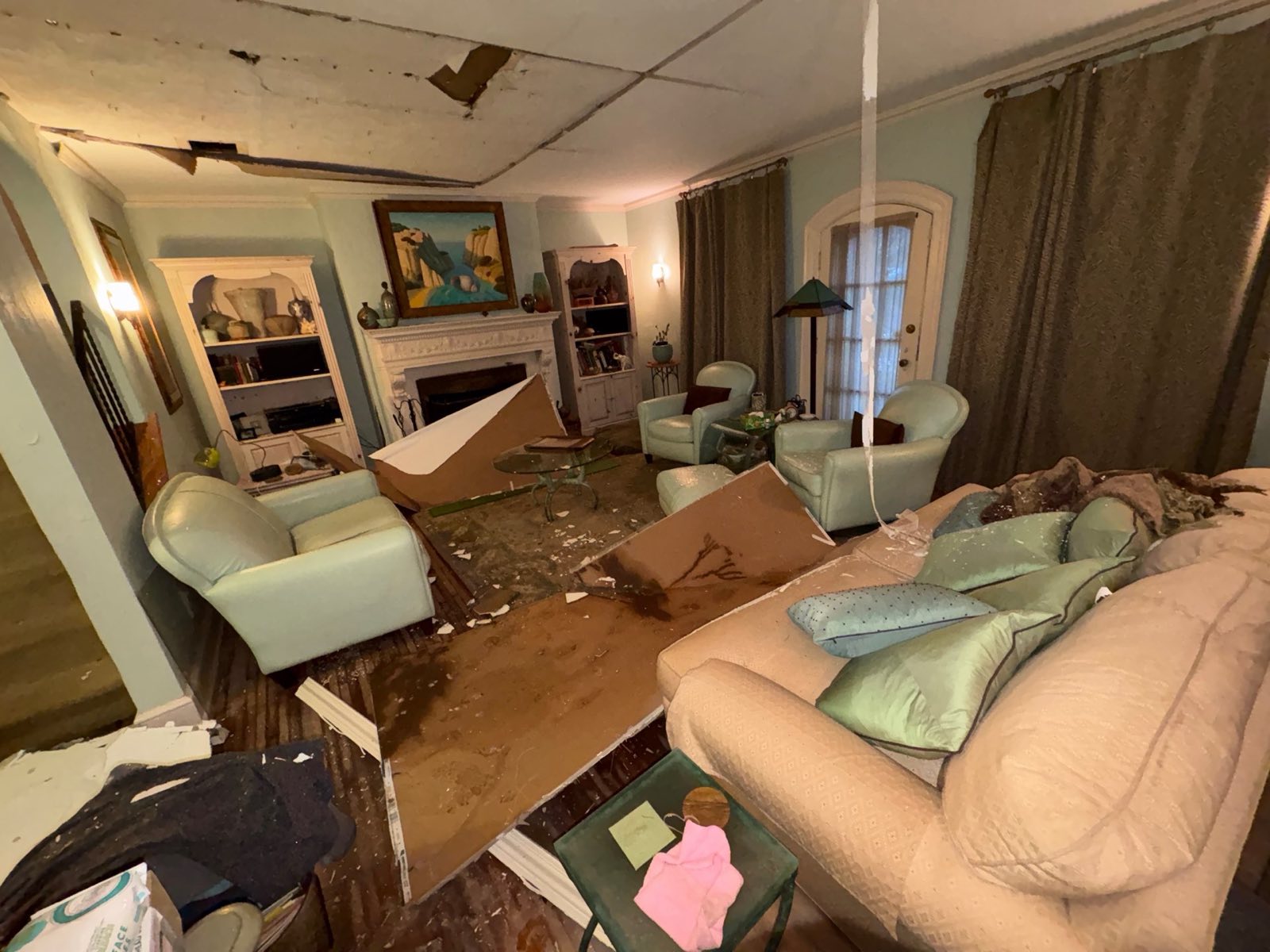
Manhattan's housing stock splits broadly into two families, and each fails in its own way. The pre-war inventory — grand co-ops along Central Park West and West End Avenue, tenement-style walk-ups in the East Village and Harlem — was built with plaster on lath, hardwood subfloors, and original steam heat. Plaster holds water invisibly; a ceiling that looks merely stained can be saturated and structurally compromised. Steam risers and radiator valves in these buildings are often a century old, and when a riser lets go in January the release is hot, fast, and destructive to everything below it.
The post-war and modern inventory — white-brick co-ops in Yorkville, glass condo towers in Hudson Yards, Billionaires' Row, and the Financial District's office-to-residential conversions — brings different failure points: PTAC and fan-coil condensate lines, washer hoses in units that were never plumbed for laundry, curtain-wall leaks during wind-driven rain, and sprinkler discharges that dump enormous volumes in minutes. High-rise losses also mean high-rise logistics: freight elevator scheduling, service-entrance access, and building alteration rules that govern what can be opened and when.
Doorman buildings add a layer of process that we treat as part of the job, not an obstacle. Nothing enters the building without a COI naming the corporation and managing agent, work hours are set by house rules, and negative-air containment has to keep hallways clean enough for white-glove standards. We build all of that into the first-day plan.
How water losses unfold in Manhattan
How Leaks Travel Through an Apartment Stack
The most common Manhattan loss is not a flood — it is an upstairs neighbor. Dishwasher lines, wax rings, radiator air valves, and shower pans fail quietly, and water follows plumbing chases and joist bays straight down the line of apartments stacked below. By the time a resident on a lower floor sees a bubble in the paint, two or three units above may be involved.
Effective mitigation means tracing the water to its source unit, mapping every affected apartment with moisture meters and thermal imaging, and drying the full vertical path — not just the unit that called. We coordinate access through the super and managing agent so no wet cavity gets skipped, because a missed joist bay between floors is where mold starts.
Winter Riser and Steam-Line Failures
Deep cold snaps are Manhattan's flood season. Heat risers freeze in exterior walls of setback floors, steam traps fail and hammer old fittings loose, and sprinkler branch lines in unheated stair bulkheads burst and drain down the core of the building. These events routinely involve five, ten, or more units at once.
Multi-unit winter losses demand triage: shut-off confirmation with building staff, rapid extraction floor by floor, and a drying plan that treats the building as one system. We stage equipment by riser line, meter shared walls between units, and produce per-unit drying logs so each shareholder, unit owner, and the building itself has clean documentation for whatever policies respond.
Co-op Boards, Alteration Agreements, and Insurance Layers
In a Manhattan co-op or condo, restoration touches at least two insurance layers: the building's master policy and each resident's HO-6 unit policy. Which policy responds to walls, floors, fixtures, and personal property varies with the proprietary lease, the bylaws, and the policies themselves — coverage terms differ building to building, and we never assume. What we do is document the loss thoroughly so owners, boards, and managing agents each have what they need.
Repairs beyond mitigation often trigger the alteration agreement process. We scope mitigation and rebuild as separate phases so emergency drying can start immediately while any board sign-offs for reconstruction proceed in parallel. The homeowner, the board, or management chooses their contractor — our job is to make that choice easy with clear scopes, COIs on file, and crews that respect house rules.
Manhattan neighborhoods we serve
Real communities — and the water losses we most often see in each.
Pre-war co-ops off Park and Fifth where plaster ceilings and original risers make vertical leak-tracing the first task.
Grand pre-war stock along CPW and Riverside with deep floor plates that hide long horizontal water travel.
Post-war white-brick co-ops with aging galvanized branch lines and PTAC condensate failures.
Loft conversions and new glass condos side by side — exposed ceilings in one, concealed fan-coil piping in the other.
Office-to-residential conversions where original commercial risers and sprinkler mains serve residential floors.
Brownstone rows and tenement walk-ups where roof and parapet leaks migrate down top-floor units.
Cast-iron loft buildings with timber structure that demands careful, monitored drying to avoid over-drying historic wood.
Walk-up tenements with shared risers, where one failed valve can involve every unit on a line.
Full restoration services in Manhattan
One operation covers every category — from emergency mitigation to full reconstruction.
Water Damage Restoration
Restoration Doctor of NYC provides emergency water extraction, moisture mapping, and structural drying for apartments, co-ops, condos, brownstones, and commercial spaces throughout the five boroughs, working within building rules, insurance documentation requirements, and the realities of vertical living.
Sewage Cleanup
Restoration Doctor of NYC performs emergency sewage extraction, contaminated-material removal, cleaning, and disinfection for sewer backups and drain failures in brownstone cellars, apartment buildings, and commercial spaces throughout New York City.
Mold Remediation
Restoration Doctor of NYC provides containment-based mold remediation for apartments, brownstones, and commercial spaces across the five boroughs, performed in a manner consistent with the IICRC S520 standard and with awareness of New York State and City mold regulations.
Fire Damage Restoration
Restoration Doctor of NYC handles the full arc of fire recovery in New York City properties — emergency board-up and securing, smoke and soot cleaning, odor treatment, water mitigation from firefighting, and structural rebuild — with the building coordination that multi-unit fires demand.
Contents Restoration
Restoration Doctor of NYC provides full contents services for New York City losses: detailed photo inventory, professional pack-out through the realities of NYC building access, specialized cleaning and deodorization, climate-controlled storage outside Manhattan, and coordinated return after rebuild.
Reconstruction
Restoration Doctor of NYC rebuilds water-, fire-, and mold-damaged spaces across the five boroughs, managing the approvals, access logistics, and trade coordination that New York buildings require, and restoring everything from patched drywall to full gut renovations of loss-affected units.
Verify us before you call
Our customer feedback lives on the network's verified reviews hub and on our New York City Google Business Profile — source-linked aggregates, never numbers typed onto a marketing page. Check both, then call.
Frequently asked
Active water, mold, fire, or sewage event?
Connect directly with the Restoration Doctor team for your region. Crews are on standby 24/7 with documented response protocols.
Financing available through Stripe, subject to lender approval.