Sewage Cleanup and Removal in NYC
A sewer backup is not a mopping job. Sewage carries bacteria, viruses, and contaminants that make everything it touches a health question. Restoration Doctor of NYC handles extraction, removal, and disinfection so your space is actually safe again — not just dry.
Why Sewer Backups Are a New York Problem
Much of New York City sits on a combined sewer system, meaning stormwater and sanitary sewage share the same pipes. When an intense summer downpour dumps an inch of rain in an hour, that shared system can exceed capacity, and the overflow looks for the lowest available exit — which is frequently a floor drain, toilet, or slop sink in somebody's cellar. Brownstone owners in Brooklyn and row-house owners in Queens know this pattern well: the storm passes, and the below-grade level is holding several inches of gray-black water that came up rather than in.
Building-side failures cause the rest. A century-old clay or cast-iron house trap clogs with roots or grease; a building's main drain line blocks and every fixture above sends its wastewater to the lowest apartment; a sewage ejector pump in a converted cellar apartment fails during a busy weekend. In multi-family buildings, a blocked stack can push wastewater from the entire line of apartments into the lowest unit on that stack — a genuinely miserable event for whoever lives there.
Whatever the cause, the material involved is what restoration professionals classify as Category 3 water: grossly contaminated, carrying pathogens and other agents that can cause illness. That classification, drawn from the IICRC S500 standard our work is consistent with, changes everything about the response. Porous materials that could be dried after a clean-water leak must instead be removed. Surfaces that touched the water require cleaning and disinfection, not just drying.
What a Professional Sewage Response Involves
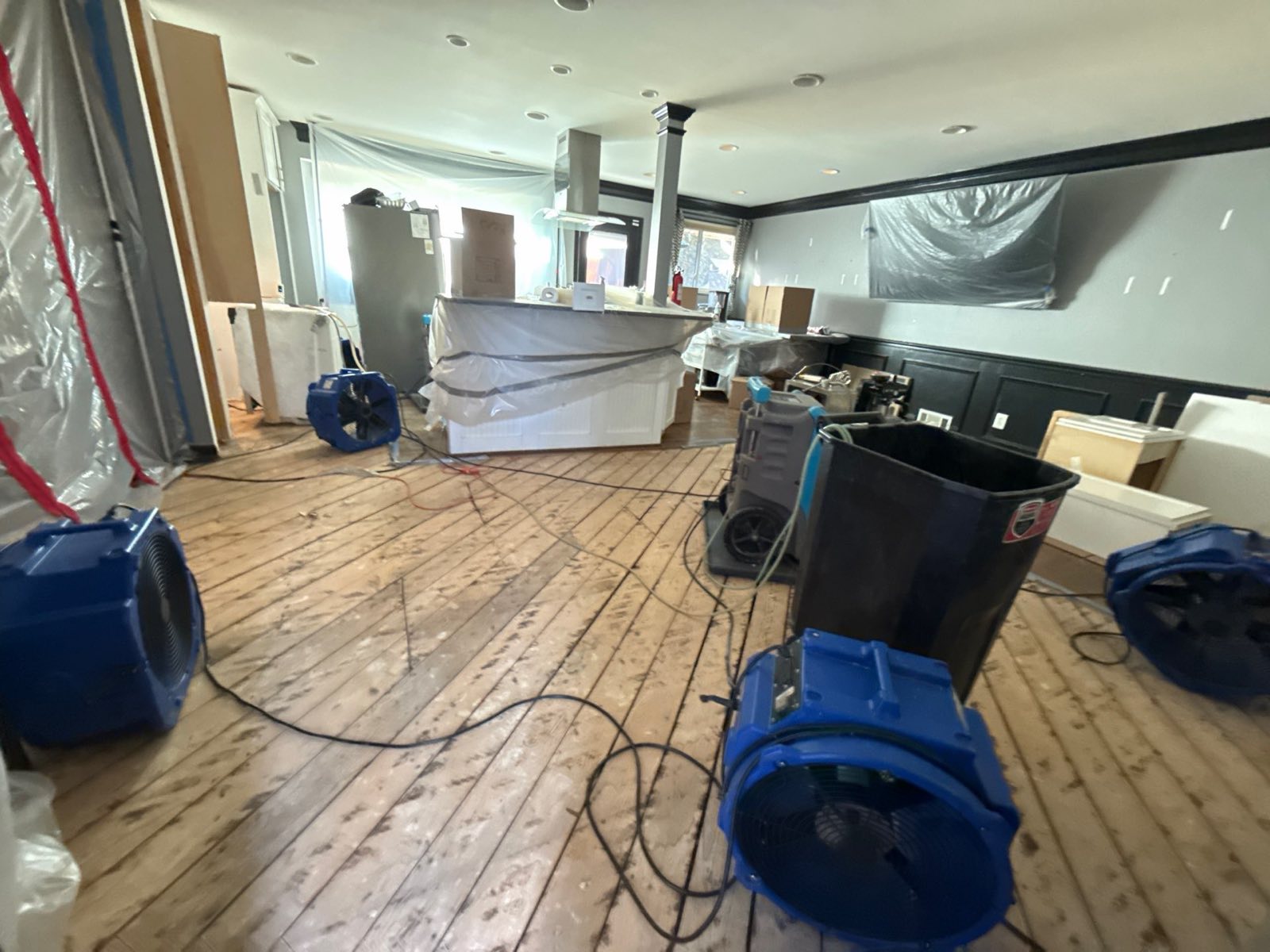
The first step is protecting people. Occupants — especially children, older adults, and anyone with respiratory or immune conditions — should stay out of the affected area until it has been decontaminated. Our technicians work in appropriate protective equipment and establish containment so contamination does not track into unaffected parts of the home or building. In an occupied apartment building, containment matters doubly, because hallways and elevators are shared space.
Next comes extraction and removal. We pump and extract standing sewage, then remove contaminated porous materials: carpet and pad, saturated drywall and insulation, and cardboard or fabric contents that absorbed the water. Contaminated debris is bagged, sealed, and removed from the building — in a walk-up or a building with freight-elevator rules, that means carefully planned trips that keep sealed waste away from common areas and neighbors. Hard, non-porous surfaces like concrete, tile, and metal are cleaned, disinfected, and verified rather than removed.
After removal and cleaning, the space is dried like any water loss, with dehumidification and monitored moisture readings — but the sequence matters. Drying a contaminated space before it has been cleaned simply dries the contamination in place. We clean first, disinfect second, and dry third, then perform a final wipe-down of the work area. When odor persists in a structure after cleaning, we deploy targeted odor treatment rather than masking agents.
Cellars, Crawl Spaces, and Below-Grade Apartments
Below-grade space is where most New York sewage losses happen, and it is also the hardest space to work in. Brownstone cellars are often low-ceilinged, cut up by mechanical equipment, and finished over the decades into laundries, gyms, offices, or storage. Every finished surface below the flood line becomes part of the removal scope, and mechanical equipment that sat in sewage — furnaces, water heaters, washing machines — needs evaluation by the appropriate trade before it runs again.
Basement and cellar apartments deserve special mention. When a rental unit below grade takes a sewage backup, tenants lose their home, landlords face habitability obligations, and the cleanup has to be thorough enough that the space is genuinely safe for re-occupancy, not just visually clean. We document pre-existing conditions, the extent of contamination, the materials removed, and the disinfection performed, giving owners and tenants alike a clear record of what was done.
For owners who face repeat backups, cleanup alone is treating the symptom. While plumbing repairs and backwater-valve installation are work for a licensed plumber, we see the aftermath of these events constantly and will tell you plainly when the damage pattern suggests a building-side problem worth investigating — because the second cleanup costs as much as the first.
Insurance, Documentation, and Who Decides
Coverage for sewer and drain backups is one of the most policy-specific areas in property insurance. Many policies address this exposure through an optional endorsement, often with its own limit, and the details differ between a homeowner's policy, a co-op or condo unit owner's HO-6 policy, and a building's master policy. Whether a given backup is addressed under the unit policy, the building policy, both, or neither depends on the policy language and the facts of the loss — policies vary, and your broker or carrier is the right source for that answer.
Our role is mitigation and documentation. We photograph conditions before, during, and after the work, itemize removed materials, log equipment and labor, and produce a scope that clearly separates cleanup, removal, disinfection, and drying. Clean documentation serves every party to the loss, however the coverage questions resolve.
One thing we are careful about: the decision to hire us belongs to you — the homeowner, board, or property manager — and payment for covered work is governed by the policy itself. We do not negotiate with or represent you before your insurance carrier, and we will never tell you that work is waiting on an adjuster's permission. Your property, your contractor choice, your timeline.
Speed Matters More With Sewage Than With Any Other Loss
Clean water sitting overnight is a bigger drying job. Sewage sitting overnight is a bigger contamination problem: bacteria multiply, contamination wicks higher into walls, odors set into porous materials, and the removal scope grows by the hour. A backup addressed the same day might mean removing carpet and a foot of drywall; the same backup addressed three days later can mean gutting the room.
Cost follows scope. A small, contained backup in an unfinished cellar sits at the low end of the range; a finished basement apartment with deep standing sewage sits much higher, and every estimate we give is a range until we have inspected and measured. What we can promise is a same-call dispatch decision, honest scoping, and a space that is decontaminated to a professional standard rather than superficially cleaned.
If you have sewage in your home or building right now, keep people and pets out of the affected area, avoid running water into affected drains, and call Restoration Doctor of NYC at (646) 789-6264. We answer 24 hours a day.
Frequently asked
Active water, mold, fire, or sewage event?
Connect directly with the Restoration Doctor team for your region. Crews are on standby 24/7 with documented response protocols.
Financing available through Stripe, subject to lender approval.